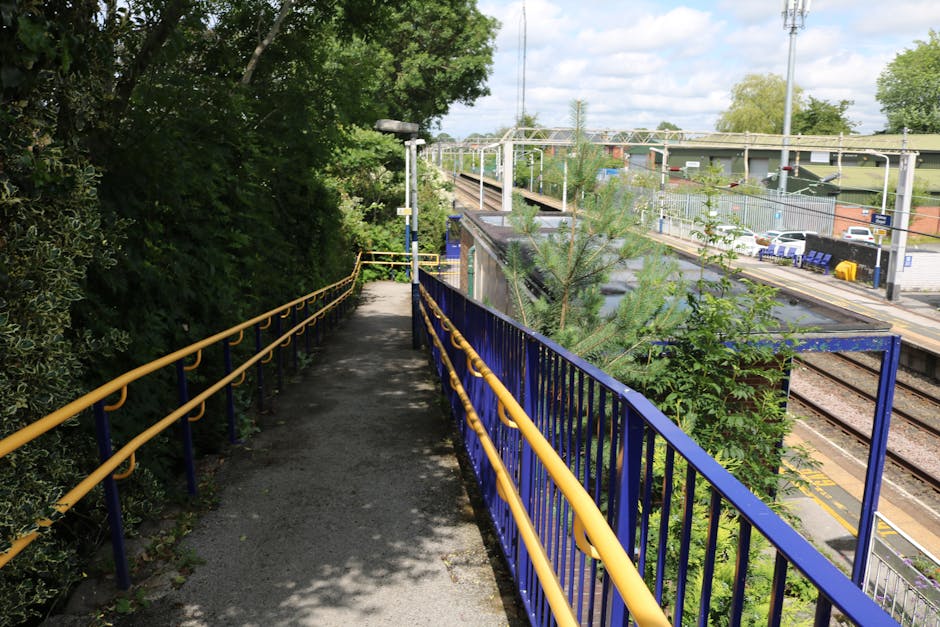
How gardeners handle difficult access gardens by Greenford Station

Some gardens look simple from the pavement and then turn into a small puzzle the moment you step inside. Narrow side passages, steep steps, shared alleyways, awkward slopes, basement courtyards, and tight terraces around Greenford Station can make routine garden work feel much harder than it should be. That is exactly where How gardeners handle difficult access gardens by Greenford Station becomes more than a keyword. It is the real-world skill of getting people, tools, waste, and materials in and out safely, without tearing up the space or wasting time.
In practice, good gardeners do not just "push through" access problems. They plan around them. They measure, adapt, protect surfaces, choose lighter equipment, and sequence the job so it works in a cramped or awkward layout. If you have ever wondered why one garden can be maintained in an hour and another seems to fight back at every turn, well, access is usually the hidden reason. This guide walks through the methods, benefits, risks, and best practices so you can understand what a professional approach really looks like.
For many local property owners, the biggest relief is simply knowing that difficult access does not mean impossible. It means different. And with the right approach, even a tricky garden can be kept tidy, healthy, and genuinely pleasant to use.
- Why access matters in difficult gardens
- How the work is carried out
- Benefits and practical advantages
- Who needs this kind of help
- Step-by-step approach
- Expert tips for better results
- Common mistakes to avoid
- Tools and recommendations
- Compliance and best practice
- Methods compared
- Real-world example
- Practical checklist
- Conclusion
- Frequently asked questions
Why How gardeners handle difficult access gardens by Greenford Station Matters
Difficult access changes almost every part of a garden job. If a lawn mower cannot fit through the gate, if waste has to be carried by hand through a narrow passage, or if a hedge sits behind steps and a tight turn, the job stops being straightforward. A poor approach can damage paving, bruise planting beds, slow down the work, and create avoidable safety risks. That is why access planning is not a side issue; it is the foundation.
In and around Greenford Station, many gardens sit behind terraced homes, older layouts, or compact urban plots. These spaces can still be beautiful, but the route in matters as much as the work itself. A skilled gardener looks at the whole journey: how to enter, where to store materials, where to cut, how to remove waste, and how to leave the site clean. It sounds a bit dull, I know, but that invisible organisation is what makes the difference between a stressful job and a calm one.
There is also a cost angle. When access is awkward, labour time rises quickly if the job is not planned well. The right method saves time, protects surfaces, and reduces repeated trips. It also tends to make the garden itself easier to maintain in future, which is handy if you want a lower-effort routine. For readers interested in keeping upkeep manageable, the advice in this guide to low-maintenance gardening on a budget fits nicely alongside access planning.
Expert summary: difficult access gardens are less about "hard work" and more about "smart work". The best results usually come from preparation, tidy workflows, and choosing the right equipment for the space, not the largest one available.
How How gardeners handle difficult access gardens by Greenford Station Works
The process usually starts before a single plant is moved. Good gardeners assess entry points, surface conditions, gate width, head height under canopies or porches, and the route from the front of the property to the work area. They also look for trip hazards, slippery steps, hidden cable runs, and places where waste bags or tools might block access. Small detail, big payoff.
Once the layout is understood, the job is broken into stages. That may mean carrying in hand tools first, then smaller machines, then bags for cuttings, and finally collecting waste in manageable loads. In some gardens, the smartest plan is to avoid heavy machinery altogether. In others, compact kit can still work fine if the route is protected and the lawn or paving can take the load.
The operational side often includes:
- Site walk-through: identifying gates, steps, slopes, narrow turns, and fragile surfaces.
- Access protection: using boards, mats, or careful carrying to avoid scuffing or compaction.
- Tool selection: choosing lightweight, cordless, or hand tools where suitable.
- Waste strategy: bagging, staging, and removing cuttings in a way that suits the access route.
- Task sequencing: working from back to front, top to bottom, or dry to wet so the route stays usable.
Sometimes the most effective change is not in the gardening itself but in the layout. A narrow run can become easier if a few awkward pots are repositioned, a hedge is trimmed back, or a storage point is created closer to the garden. For layouts with edging, structures, or a tired boundary line, it may also make sense to explore landscaping support or even boundary improvements if access has become permanently awkward.
And yes, good gardeners think about the exit route too. You do not want to finish a tidy border and then drag muddy bags across clean paving. That is the sort of thing that makes everyone sigh.
Key Benefits and Practical Advantages
Handling a difficult access garden well gives you more than convenience. It changes the way the whole space performs. The obvious benefit is that work gets done without damage, but there are several quieter advantages as well.
- Less disruption: residents, neighbours, pets, and children are less likely to be disturbed when movement through the property is controlled.
- Lower risk of damage: careful planning reduces broken pots, scuffed walls, compacted soil, and cracked slabs.
- Better quality finish: when the crew is not wrestling with access, more energy goes into detailed work such as pruning, edging, and clean-up.
- More realistic scheduling: the job is easier to estimate once access constraints are understood.
- Safer working conditions: sensible load sizes, clear routes, and stable footing reduce accidents.
There is also a design benefit that often gets missed. Difficult access gardens tend to reward simpler planting and smarter layouts. That can lead to calmer spaces with less clutter, fewer maintenance headaches, and better visual flow. If you are leaning in that direction, the ideas in container gardening for urban living and vertical gardening are especially useful for compact sites.
Truth be told, a difficult access garden often becomes more functional after it has been rethought. A narrow space can still feel generous if it is planted and maintained with precision instead of bulk.
Who This Is For and When It Makes Sense
This approach is useful for a wide range of properties, not just tiny back gardens. If any part of the journey into the garden is awkward, there is probably a case for a specialist access plan.
You may benefit from this kind of support if you have:
- narrow side access or a passage too tight for larger tools;
- steps, split levels, or steep gradients;
- shared access through a building, alley, or communal area;
- rear gardens behind terraced or mid-terrace homes;
- roof terraces, courtyard gardens, or basement patios;
- fragile paving, older slabs, or delicate borders that need protection;
- heavy seasonal work such as hedge cutting, leaf clearing, or waste removal.
It also makes sense if you simply do not want the job turning into a weekly struggle. Some homeowners can technically manage their garden themselves, but once the access route becomes a repeated inconvenience, they stop maintaining the space properly. That is a shame, because neglected access often leads to neglected planting. A useful reset can come from the right maintenance plan, or even a more structured garden maintenance service that keeps the whole cycle under control.
If your outdoor space is used by children or dogs, access planning matters even more. It reduces the chance of tools being left in awkward places and helps keep the route through the garden clear. For a related read, see tips for making a garden safe for dogs and garden ideas that captivate children.
Step-by-Step Guidance
Here is the practical sequence most experienced gardeners follow when dealing with difficult access. It is not fancy, just reliable.
-
Survey the route first.
Measure the narrowest points. Check gate openings, stair width, turn radius, and any low overhead obstacles. If something looks tight by eye, it probably is tight.
-
Choose the right kit.
Use compact, portable, or cordless equipment where possible. A smaller tool that can actually reach the work area beats a larger one that never leaves the shed. For many jobs, the essentials listed in the essential gardener's toolkit are the right starting point.
-
Protect the access route.
Lay temporary protection if paving, decking, or turf could be damaged. On wet days, this is especially helpful. A few boards can save a lot of grief. If the route includes a patio, keeping the surface sound matters, so patio cleaning can also be part of the access strategy.
-
Work in stages.
Start with overgrowth, then prune, then clear, then finish with detail work. For hedge-heavy gardens, getting the perimeter under control first often makes the rest feel easier. If hedges are a major part of the problem, hedge trimming in Greenford is often the practical answer.
-
Keep waste management simple.
Use smaller loads and make sure cuttings are bagged or stacked in a place that does not block the route. The goal is to avoid creating a second problem while solving the first.
-
Finish with a clean exit.
Check for debris, wipe down gear if needed, and make sure the access path is safer than it was when you arrived. That final sweep is part of the job, not an afterthought.
If the job involves trees, large woody material, or branches that cannot be removed safely by hand, it may be time to consider tree surgery support. And if the access route itself is part of the obstruction, a structural review may be needed. That can sound dramatic, but sometimes it is just honest maintenance.
Expert Tips for Better Results
A few small decisions tend to make a disproportionate difference. These are the sorts of things that experienced gardeners notice after a few years of wrestling with narrow spaces in the drizzle at 8:15 a.m. - not glamorous, but very real.
- Measure the actual usable route, not just the entrance. A gate may be wide enough, but a bend two metres later can still stop a wheelbarrow.
- Use smaller, repeatable loads. More trips can be better than forcing one risky oversized movement.
- Prefer hand tools for detail work. In tight gardens, hand shears, compact pruners, and lightweight blowers often outperform bulkier kit.
- Watch the weather window. A damp morning can make steps and slabs slick. In the UK, that little bit of timing matters more than people like to admit.
- Keep storage close. Even a temporary staging area near the access point reduces clutter and wasted movement.
- Think about the garden design too. Less clutter, fewer dead ends, and more structured planting generally make future maintenance easier.
One useful mindset shift is to treat access as part of the design, not a limitation to hide. If the route is awkward, the planting scheme may need to be a bit smarter. Ground cover, climbers, and layered structure can all help reduce the amount of heavy upkeep. For ideas, see ground cover plants for UK gardens and evergreen climbers for shady areas.
Also, do not underestimate the power of a tidy run-up. If the access route is clear before the first tool comes out, the whole visit feels calmer. Everyone moves better. No one is stepping around the same watering can three times. Been there.
Common Mistakes to Avoid
Most access problems are made worse by avoidable mistakes. The good news is that they are easy to spot once you know what to look for.
- Bringing the wrong equipment. A machine that cannot physically pass through the route is just a heavy disappointment.
- Skipping the survey. Guessing the access route often leads to delays, awkward lifting, and damage.
- Ignoring surface protection. One careless drag across paving can leave marks that stay visible for months.
- Overloading bags or bins. Excess weight turns a simple carry into a safety issue.
- Leaving waste near the exit. This blocks circulation and creates a bottleneck for the rest of the job.
- Trying to do too much in one visit. In difficult gardens, a measured plan usually wins over brute force.
Another quiet mistake is failing to adapt the garden itself. If the same access pain comes up again and again, there may be a long-term fix worth considering. Sometimes that means better layout choices, better boundaries, or a bit of regrading. If the garden is exposed as well as awkward, it can help to look at wind barrier ideas or garden preparation for weather challenges. Not directly about access, yes, but related in the sense that good garden planning reduces day-to-day friction.
And a small warning: never assume the narrow route is "fine because it worked once". Gardens change. Plants swell, soil softens, and paths shift. What worked in spring can be a nuisance by late summer.
Tools, Resources and Recommendations
Specialist access work tends to favour compactness and control over raw power. That does not mean settling for poor results. It means matching the tool to the route.
| Method | Best for | Strengths | Limitations |
|---|---|---|---|
| Hand tools | Very narrow or fragile-access gardens | Precise, light, easy to carry | Slower on larger jobs |
| Compact cordless kit | Medium jobs with limited access | Portable, low hassle, less cable management | Battery planning needed |
| Small two-person carries | Bulky waste or awkward materials | Safer for heavy loads | Needs coordination and space |
| Surface protection boards | Patios, paths, steps, decking | Reduces marking and wear | Extra setup time |
| Staged waste removal | Gardens where the exit route must stay clear | Organised, safer, less clutter | Requires planning and discipline |
Useful practical support can also come from broader garden services when access is part of a bigger project. For example, regular lawn mowing, careful lawn care, or structured gardening services can keep the space from becoming too dense or awkward to work in. If the layout is being refreshed, decking services may also improve circulation in a compact rear garden.
For planning and expectations, it is also worth checking business policies that support a professional standard of work. Pages such as health and safety guidance, insurance and safety, and pricing and quotes help set sensible expectations before work starts. That transparency matters. It really does.
Law, Compliance, Standards, or Best Practice
For difficult access gardens, compliance is mostly about safe working practice, responsible handling, and avoiding damage. Exact requirements depend on the property and the job, so it is best to be careful rather than overstate anything. In the UK, professionals are generally expected to take sensible precautions around manual handling, slips and trips, tool use, and site-specific risks. That does not mean every garden needs a formal document taped to the gate. It means the work should be planned with care.
For homeowners and landlords, the practical best practice is simple:
- make the access route clear before work begins;
- identify hazards such as steps, uneven paving, loose stones, or low cables;
- agree in advance how waste will be removed;
- avoid blocking shared or emergency access;
- protect surfaces where tools, barrows, or bags will pass;
- keep children and pets away from active work areas.
If access issues involve shared boundaries, neighbours, or a side passage that crosses more than one property, communication matters a lot. Clear agreement prevents misunderstanding. It also keeps the mood better, which no one puts on a quote sheet but everyone appreciates. For business conduct and customer process, pages like terms and conditions, complaints procedure, and accessibility statement help show a careful, professional approach.
Where waste or materials are involved, the principle is straightforward: do not create a new hazard while solving the original one. Nice and boring. Exactly what you want in this context.
Options, Methods, or Comparison Table
There is no single best method for every difficult access garden. The right choice depends on the route, the task, and how often the space needs attention. Here is a practical comparison.
| Approach | Ideal situation | Pros | Cons |
|---|---|---|---|
| Full manual approach | Very tight courtyards or fragile properties | Maximum control, minimal surface impact | Slower, more labour-intensive |
| Mixed manual and compact equipment | Typical small gardens with one awkward access point | Balanced speed and flexibility | Requires good planning |
| Redesigned access plus maintenance plan | Gardens that are repeatedly difficult to service | Long-term ease, better future maintenance | May involve extra upfront work |
| Seasonal targeted visits | Spaces that only become difficult during certain months | Efficient for hedge, leaf, or winter tasks | Needs good timing |
If the garden is exposed, overgrown, or structurally awkward, combining methods often works best. For example, a courtyard might need manual clearance, compact hedge work, and then a redesign that reduces future bottlenecks. If a hedge is blocking movement, the information on fast-growing hedge selections and artistic hedge shaping may help you think about the hedge as a design feature, not just a barrier.
Case Study or Real-World Example
Here is a realistic local example. A homeowner near Greenford Station had a back garden behind a narrow side passage and a steep step up from the kitchen. The lawn was modest in size, but the route in was so tight that the old mower barely fitted, and green waste often got left in half-finished piles because carrying everything in one go was awkward.
The solution was not dramatic. The gardener started with a route survey and found that the tightest turn was actually the real constraint, not the gate itself. So the workflow changed: hand tools were used for most pruning, cuttings were bagged in smaller loads, and the access route was protected on the section with the most wear. The hedge line was cut back just enough to improve passage, and the planting was simplified a little to make future maintenance less fussy.
By the end, the garden looked cleaner, but more importantly it worked better. The homeowner could move through it without feeling as though they were squeezing past a delivery van in a lane at rush hour. Not exactly romantic, maybe, but much better for day-to-day life.
The deeper lesson is that access problems are often solved by a combination of maintenance and design. A one-off tidy-up helps. A smarter layout helps more.
Practical Checklist
Use this checklist before any difficult access garden job. It keeps things simple and prevents last-minute surprises.
- Measure the narrowest access points.
- Check for steps, slopes, and slippery surfaces.
- Confirm where tools and waste can be staged.
- Choose compact tools that suit the route.
- Protect paving, decking, and turf if needed.
- Keep pathways clear of pots, toys, hoses, and loose debris.
- Plan the order of work before starting.
- Use smaller loads if waste removal is awkward.
- Check whether hedges, branches, or boundaries are causing the access issue.
- Allow extra time for setup, clean-down, and safe exit.
- Agree the plan if shared access or neighbour boundaries are involved.
- Review whether the layout could be improved for future visits.
That last point is worth repeating, because it saves headaches later. Review the layout. Then review it again a season later if the garden changes quickly.
Get a free quote today and see how much you can save.
Conclusion
Handling difficult access gardens is not about forcing the issue. It is about reading the space properly, planning the route, choosing the right tools, and respecting the constraints of the property. Around Greenford Station, where many gardens are compact, enclosed, or just plain awkward to reach, that careful approach can make the difference between a stressful job and a tidy, efficient result.
If you remember only one thing, let it be this: access is part of the garden. Not separate from it. Once you start treating it that way, the work becomes cleaner, safer, and far more manageable. And the garden? It gets easier to live with, which is really the point.
Sometimes the smartest gardening move is the quiet one - the one that makes next month easier, not just today.
Frequently Asked Questions
What makes a garden classed as difficult access?
A garden is usually considered difficult access when tools, people, waste, or materials cannot move through it easily. Common causes include narrow side passages, steps, tight turns, steep slopes, shared entrances, and fragile surfaces that need care.
Do gardeners bring special equipment for awkward access?
Often, yes. Many will use compact or cordless equipment, smaller hand tools, and protective boards or mats where needed. The exact kit depends on the route and the job, but smaller and lighter is usually better in cramped spaces.
Can a difficult access garden still be maintained regularly?
Absolutely. In fact, regular maintenance is often the best way to stop the space becoming more difficult over time. When gardens are cleared and cut back consistently, access usually improves rather than gets worse.
Will access problems make the work more expensive?
They can, because more planning and more labour time may be needed. That said, a well-organised approach often reduces wasted time and damage, so the final cost may be more reasonable than people expect. A proper quote should explain the factors clearly.
How do gardeners protect paving or decking while working?
They may use temporary boards, mats, careful carrying methods, and staged waste removal. The main idea is to avoid dragging heavy items over delicate surfaces and to keep the route clean while work is under way.
What if the garden is only hard to reach because of overgrown plants?
That is quite common. Sometimes the access problem is not structural at all; it is just growth that has been allowed to narrow the route. Cutting back hedges, managing climbers, and reducing clutter can make a huge difference.
Is it better to use hand tools in difficult access gardens?
Often yes, especially where the route is very tight or the surface is delicate. Hand tools are slower, but they are easier to carry and usually safer for awkward spaces. For larger gardens, a mix of hand tools and compact machinery tends to work best.
How long does a difficult access garden job usually take?
It depends on the size of the space, the amount of overgrowth, the route in and out, and how much waste needs removing. Access issues can add time, especially if the garden needs to be worked in stages rather than all at once.
Do pets or children affect how access jobs are planned?
Yes, they do. Safe routing and clear working zones matter much more when pets or children use the garden. It is sensible to keep tools and waste away from play areas and to agree which parts of the space remain off-limits during the visit.
What should I ask before booking a gardener for a hard-to-reach garden?
Ask how they assess access, what equipment they use, how they handle waste removal, and whether they need photos or measurements before the visit. It is also wise to ask about insurance, safety procedures, and how they protect surfaces.
Can access issues be improved permanently?
Sometimes, yes. Better layout, simpler planting, hedge reduction, pathway adjustments, or boundary improvements can all help. In other cases, the best answer is simply a smarter maintenance routine that works with the space as it is.
Why do gardens near stations or busy streets often feel harder to service?
Because they are often compact, enclosed, and built around older property layouts. The garden itself may be small, but the route, boundary lines, and storage space can make the practical side more challenging than expected.